Helping organisations build the conditions for sustainable performance
When Performance Hides a Different Story
New Title
Over the last few months, while piloting and refining the BE-WELL framework, I have been struck by a recurring observation.
Very few people describe themselves as failing.
Most are performing.
Delivering.
Meeting expectations.
Supporting their teams.
Moving projects forward.
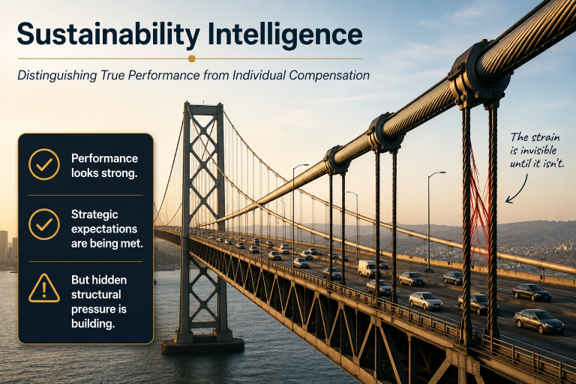
From the outside, many appear to be functioning well.
Yet when the conversation moves beyond performance itself, a different story often begins to emerge.
Conversations about recovery.
About workload.
About boundaries.
About energy.
About the gradual accumulation of pressures that have become so normal they are rarely questioned.
It has left me wondering whether performance and sustainability are too often treated as the same thing.I am increasingly convinced they are not.
The Performance Assumption
In most organisations, performance is naturally seen as a sign that things are working.
Targets are being met.
Customers are being served.
Projects are progressing.
The dashboard looks healthy.
The assumption is understandable.
If results are being achieved, the organisation must be functioning effectively.
Perhaps.
But what if performance is only telling a part of the story?
What if similar results can be produced through very different organisational conditions?
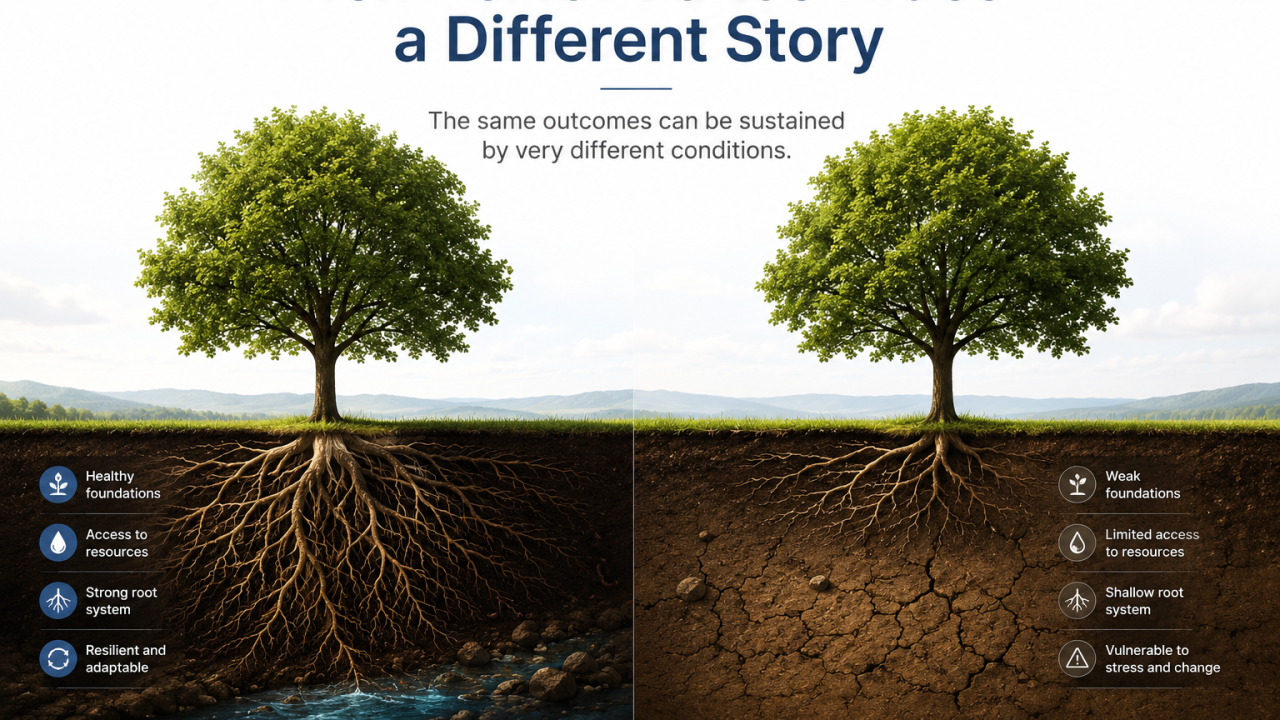
Two Organisations, Same Results
Imagine two organisations producing comparable outcomes.
Both are growing.
Both are delivering.
Both have engaged employees and capable leaders.
From the outside, they appear equally successful.
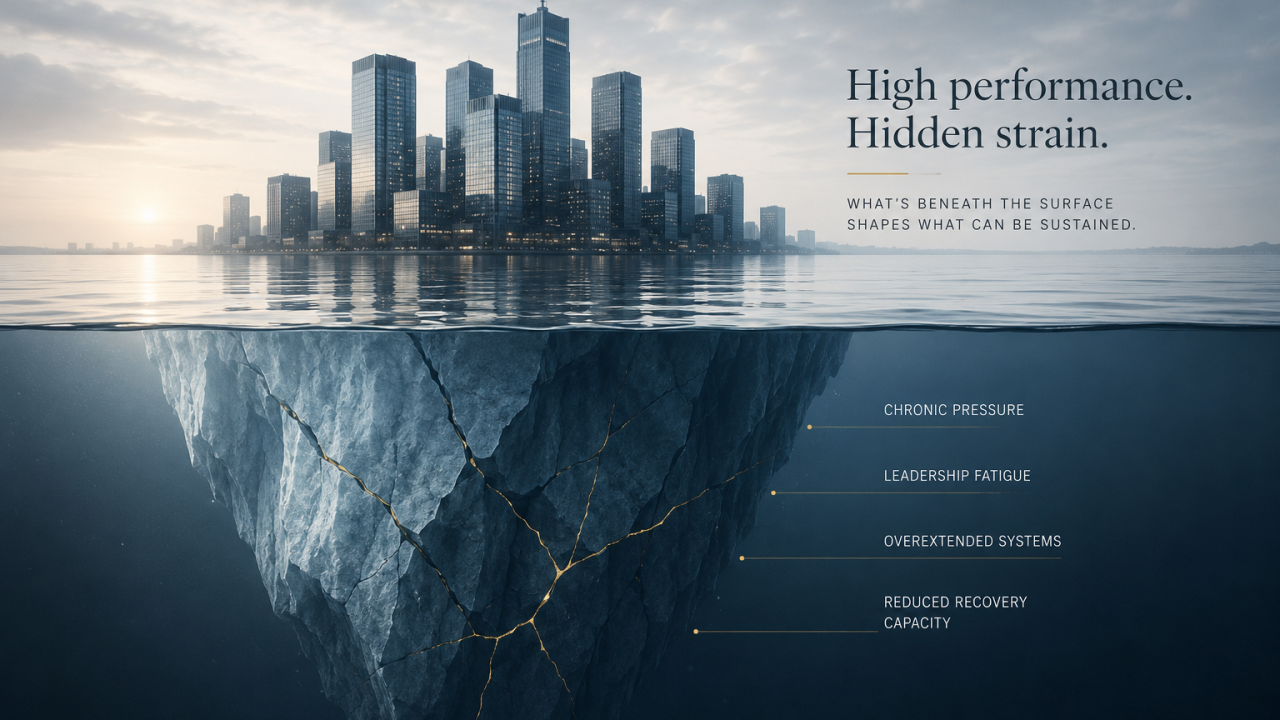
Yet beneath the surface, the conditions supporting those outcomes may be very different.
One organisation may be operating with:
- sustainable workloads
- opportunities for recovery
- healthy leadership capacity
- continuous learning
- room for adaptation
The other may be relying on:
- chronic overextension
- constant responsiveness
- accumulated fatigue
- leadership compensation
- diminishing adaptability
The outcomes may look similar.
The sustainability of those outcomes may not.
The Cost Often Arrives Later
One of the challenges with organisational sustainability is that the consequences rarely appear immediately.
People adapt.
Teams compensate.
Leaders absorb additional pressure.
High performers carry more than their share.
The organisation continues functioning.
In the short term, this can create the impression that everything is working.
In reality, the system may be drawing on reserves that are not being replenished.
Over time, those pressures may begin to appear through:
- burnout
- leadership fatigue
- declining adaptability
- increased turnover
- reduced learning capacity
- growing operational friction
The visible outcomes often change last.
Research into organisational health suggests that long-term performance depends not only on results, but on the organisational conditions supporting those results (Keller & Price, 2011).
Sustainable Performance Is Different
This distinction is becoming increasingly important for organisations navigating growth, change, and uncertainty.
Performance answers a simple question:
"How are we doing?"
Sustainable performance asks a different one:
"Can we continue doing this without degrading the conditions required to maintain it?"
The difference may appear subtle.
I suspect it is not.
Because organisations rarely struggle from a lack of effort.
More often, they struggle when effort becomes the mechanism compensating for unsustainable conditions.
A Different Leadership Question
Perhaps the challenge is not simply understanding whether performance is strong today.
Perhaps the challenge is understanding what that performance is currently costing.
What are people compensating for?
What pressures have become normal?
What organisational conditions are quietly shaping future performance?
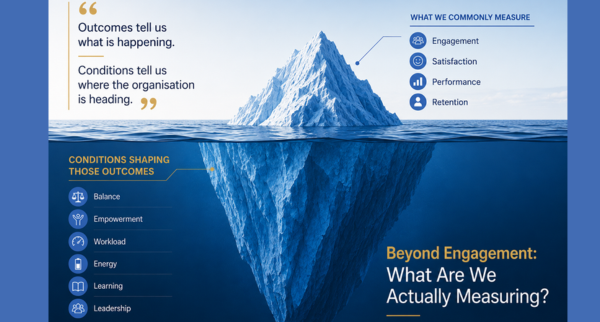
Because performance may tell us how the organisation is functioning today.
The conditions underneath it may tell us how it will function tomorrow.
Reflection
What would your organisation discover if it looked beyond performance and examined the conditions sustaining it?
References
Gallup. (2025). State of the Global Workplace.
Keller, S., & Price, C. (2011). Beyond Performance: How Great Organizations Build Ultimate Competitive Advantage.
Edmondson, A. (2018). The Fearless Organization: Creating Psychological Safety in the Workplace for Learning, Innovation, and Growth.